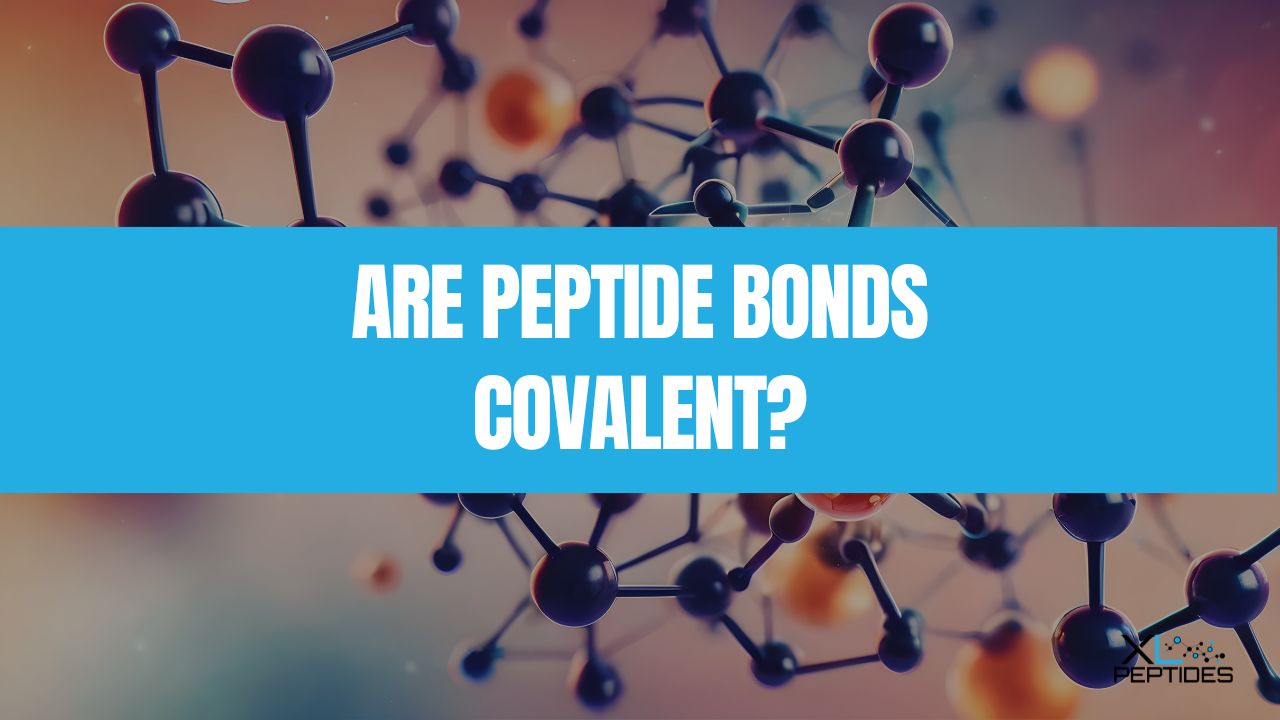
Yes, peptide bonds are covalent bonds. More specifically, they are amide-type covalent bonds that link amino acid residues together in peptide and protein structures.
This may sound like a small chemical detail, but it is important in laboratory research.
The covalent nature of peptide bonds helps explain why peptide chains have defined structures, why they are relatively stable under many conditions, and why specific chemical or enzymatic processes are needed to break them.
This short guide explains what makes peptide bonds covalent, how they form, and why they matter in research settings.
Are Peptide Bonds Covalent?
Yes. A peptide bond is a covalent bond formed between the carbonyl carbon of one amino acid residue and the nitrogen atom of another amino acid residue.
In simple terms, a covalent bond forms when atoms share electrons. In a peptide bond, the carbon and nitrogen atoms share electrons to create a stable chemical linkage.
This bond is commonly described as an amide bond because it has the same core chemical arrangement found in amides: a carbonyl group joined to a nitrogen atom.
How Peptide Bonds Form
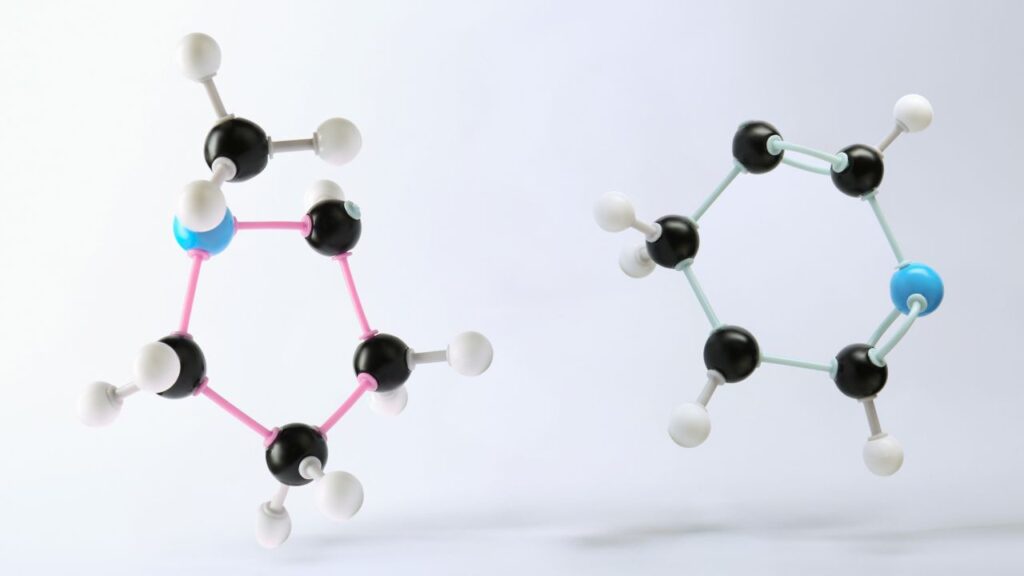
Peptide bonds form through a condensation reaction.
During this process, the carboxyl group of one amino acid residue reacts with the amino group of another. A molecule of water is formally removed, and a new covalent bond forms between carbon and nitrogen.
The resulting linkage becomes part of the peptide backbone. When multiple amino acid residues are connected in this way, they form a longer peptide chain.
This process is important in biochemical research because the order of residues and the stability of the backbone influence the structure and behaviour of peptide materials.
Why the Peptide Bond Is Called an Amide Bond
A peptide bond is often referred to as an amide linkage.
This is because it contains a carbonyl group directly attached to a nitrogen atom. The structure gives the bond specific chemical properties, including a degree of rigidity.
Unlike a simple single bond that can rotate freely, a peptide bond has partial double-bond character due to resonance. This means electrons are distributed in a way that restricts rotation around the bond.
In research terms, this restricted rotation helps shape the three-dimensional structure of peptides and proteins.
The backbone is not completely flexible, which affects folding, binding behaviour, and molecular recognition in laboratory models.
Why Covalent Bonding Matters in Peptide Research
The covalent nature of peptide bonds is important for several reasons.
First, it gives peptide chains a defined sequence. Each amino acid residue is linked in a specific order, creating a predictable backbone structure.
Second, covalent peptide bonds are relatively strong compared with many non-covalent interactions.
This helps peptide chains remain intact under conditions where weaker interactions may change more easily.
Third, peptide bond stability affects analytical work.
Researchers studying peptide identity, purity, degradation, or fragmentation often need to understand how the peptide backbone behaves under different laboratory conditions.
Fourth, peptide bond cleavage is an important area in biochemical analysis.
Peptide bonds can be broken by hydrolysis or by specific enzymes in research systems, but this does not happen in the same way as weaker interactions such as hydrogen bonding or ionic attraction.
Covalent Bonds vs Non-Covalent Interactions
It is useful to separate peptide bonds from non-covalent interactions.
Peptide bonds form the primary backbone of a peptide chain. They are covalent, meaning they involve electron sharing between atoms.
Non-covalent interactions are different. These include hydrogen bonds, ionic interactions, hydrophobic interactions, and van der Waals forces. They do not create the main amino acid sequence, but they can influence how a peptide folds, associates, or interacts in a research system.
In simple terms:
- Peptide bonds hold the chain together.
- Non-covalent interactions help influence shape, folding, and molecular behaviour.
Both are important, but they play different roles.
Can Peptide Bonds Be Broken?
Yes, peptide bonds can be broken, but they usually require a chemical or enzymatic process.
One major pathway is hydrolysis, where water is involved in breaking the bond.
In laboratory research, peptide bond cleavage may be studied under controlled chemical conditions or through enzyme-related models.
This is relevant for analytical chemistry, peptide mapping, protein sequencing, and degradation studies.
When researchers investigate peptide stability, they often look at whether the backbone remains intact or whether cleavage products appear over time.
Final Summary
Are peptide bonds covalent?
Yes. Peptide bonds are covalent amide linkages that connect amino acid residues through a shared-electron bond between carbon and nitrogen.
This covalent structure gives peptide chains their defined backbone, contributes to molecular stability, and plays an important role in peptide synthesis, analytical chemistry, degradation research, and biochemical investigation.
Understanding peptide bonds helps researchers interpret how peptide materials are formed, analysed, and studied in laboratory settings.
Note: This article is for educational and research information only. Products discussed are intended for laboratory research use only and are not for clinical, food, cosmetic, veterinary, or household applications.
FAQ
Are peptide bonds covalent or ionic?
Peptide bonds are covalent. They involve electron sharing between the carbonyl carbon of one amino acid residue and the nitrogen atom of another.
What type of covalent bond is a peptide bond?
A peptide bond is an amide-type covalent bond. It contains a carbonyl group linked directly to a nitrogen atom.
Why are peptide bonds important in laboratory research?
Peptide bonds form the backbone of peptide chains. Their covalent structure helps researchers study sequence, stability, cleavage, synthesis, and analytical behaviour.
Are peptide bonds stronger than hydrogen bonds?
Peptide bonds are covalent and generally stronger than hydrogen bonds. Hydrogen bonds can influence folding and structure, but they do not form the primary peptide backbone.
Can peptide bonds be broken in research settings?
Yes. Peptide bonds can be broken through hydrolysis or enzyme-related processes under controlled laboratory conditions. This is relevant in degradation studies and analytical workflows.
Sources
- IUPAC Gold Book – Peptides
https://goldbook.iupac.org/terms/view/P04479 - NCBI Bookshelf – Biochemistry, Peptide
https://www.ncbi.nlm.nih.gov/books/NBK562260/ - NCBI Bookshelf – Molecular Biology of the Cell: The Shape and Structure of Proteins
https://www.ncbi.nlm.nih.gov/books/NBK26830/ - Khan Academy – Peptide Bond Formation
https://www.khanacademy.org/science/biology/macromolecules/proteins-and-amino-acids/v/peptide-bond-formation - Encyclopaedia Britannica – Peptide Bond
https://www.britannica.com/science/peptide-bond