When comparing CJC-1295 research peptides, one of the first things you’ll notice is that some are labelled with DAC, while others are labelled without DAC.
Although the names are similar, they refer to chemically different research materials.
The main difference is that CJC-1295 with DAC contains an additional chemical group designed to bind to albumin, while the version without DAC does not.
This distinction affects their molecular structures, laboratory identification and analytical characteristics.
What Is CJC-1295 With DAC?
CJC-1295 is a synthetic peptide based on a modified growth hormone-releasing factor (GRF) sequence.
The DAC stands for Drug Affinity Complex. It refers to a chemical modification containing a reactive maleimide group designed to form a bond with albumin, a protein commonly used in biochemical research.
The DAC-containing structure has 30 amino acid residues, including an additional modified lysine residue at the end of the peptide.
The important point is that DAC is part of the compound’s chemical structure. It is not simply a different preparation or storage method.
What Is CJC-1295 Without DAC?
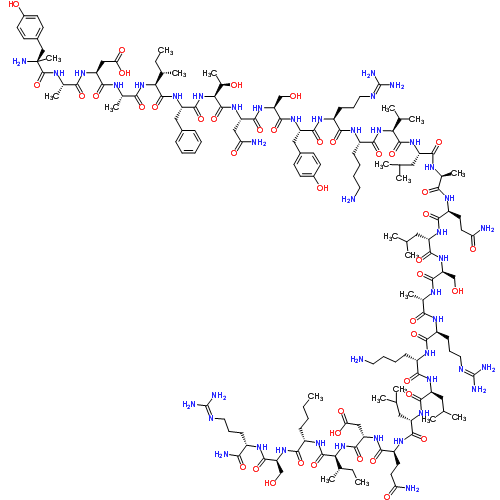
CJC-1295 without DAC is commonly known as Modified GRF (1-29) or Mod GRF 1-29.
It contains 29 amino acid residues and has four substitutions compared with the original GRF (1-29) sequence.
Unlike the DAC-containing compound, it does not have the additional albumin-reactive chemical group.
Strictly speaking, the name CJC-1295 in the original scientific literature refers to the DAC-containing structure.
However, the term CJC-1295 without DAC is widely used as an alternative name for Modified GRF (1-29).
For laboratory research, the exact chemical identity should always be confirmed rather than relying on the product name alone.
CJC-1295 With DAC vs Without DAC: Key Differences
| Feature | With DAC | Without DAC |
| Common name | CJC-1295 or DAC-GRF | Modified GRF (1-29) |
| Amino acid residues | 30 | 29 |
| DAC modification | Present | Absent |
| Albumin-reactive group | Yes | No |
| Approximate molecular weight | 3,647 Da | 3,368 Da |
| Chemical structure | Modified GRF with additional linker | Modified GRF sequence without linker |
The molecular weights shown are approximate values for the neutral peptide structures. Supplied salt forms and other components can affect the total material mass.
Both compounds share a closely related peptide backbone, but they should not be treated as chemically identical research materials.
Does DAC Affect Peptide Stability?
This is an important distinction when comparing the two materials.
The DAC modification was developed to support albumin binding. However, this does not automatically mean that CJC-1295 with DAC has a longer shelf life or remains stable for longer in a laboratory solution.
Storage stability depends on several factors, including:
- Whether the research material is lyophilised or dissolved
- Storage temperature and moisture exposure
- The composition and pH of the research solution
- Light exposure and handling conditions
- Manufacturer specifications and batch documentation
For research storage, the difference matters because the two compounds have distinct chemical structures and may require separate stability assessments.
Do not assume that storage instructions for one variant automatically apply to the other.
How Can Laboratories Identify the Correct Variant?
Because the naming conventions can be confusing, checking the material documentation is particularly important.
Before preparing a sample for laboratory analysis, check the following:
1. Product Identity: Confirm whether the material is described as CJC-1295 with DAC or Modified GRF (1-29).
2. Molecular Weight: Compare the expected molecular mass with the analytical documentation. The two structures differ by approximately 280 Da.
3. Certificate of Analysis (COA): Check that the certificate corresponds to the specific batch and identifies the correct compound.
4. HPLC and Mass Spectrometry: HPLC can help assess purity, while mass spectrometry provides valuable information for confirming molecular identity.
5. Storage History: Review the storage conditions, handling records and any documented temperature or moisture exposure.
For example, if a vial is labelled CJC-1295 with DAC but its analytical results correspond to the 29-residue compound, the discrepancy should be investigated before using the material in a controlled research protocol.
Common Laboratory Considerations
The two variants should be documented and handled as separate compounds.
Their differences in molecular structure can influence analytical behaviour, including chromatographic retention and interactions with components of a research solution.
When comparing laboratory results, use compound-specific reference information rather than assuming both variants will produce identical analytical profiles.
If unexpected results appear, check the declared molecular structure, analytical method, batch records and preparation conditions before drawing conclusions about sample quality.
Frequently Asked Questions
What Does DAC Stand For in CJC-1295?
DAC stands for Drug Affinity Complex. It is a chemical modification designed to allow the peptide to bind to albumin.
Is CJC-1295 Without DAC the Same as Modified GRF (1-29)?
The names are commonly used interchangeably in research material catalogues. However, the exact sequence and chemical identity should be verified through batch documentation.
Which CJC-1295 Variant Has a Higher Molecular Weight?
CJC-1295 with DAC has a higher molecular weight of approximately 3,647 Da, compared with approximately 3,368 Da for the non-DAC structure.
Does CJC-1295 With DAC Last Longer in Storage?
Not necessarily. The DAC modification does not establish a longer storage shelf life, and stability should be assessed using compound-specific laboratory data.
Can HPLC Distinguish Between the Two Variants?
HPLC may show differences in their chromatographic profiles, but retention time alone is not sufficient to confirm identity. Mass spectrometry provides additional structural identification information.
Final Thoughts
The difference between CJC-1295 with DAC and without DAC comes down to their chemical structures.
The DAC-containing version includes an additional albumin-reactive group, while the non-DAC version, commonly called Modified GRF (1-29), does not.
For laboratory research, understanding this distinction helps ensure accurate sample identification, appropriate storage documentation and reliable analytical comparisons.
This article is for educational and research information only. Products discussed are intended for laboratory research use only and are not for clinical, food, cosmetic, veterinary, or household applications.
Sources
- Jetté et al. (2005) – Original CJC-1295 Chemical Characterisation, Endocrinology
- PubChem – CJC-1295, Compound CID 91971820
- PubChem – 29-Residue Modified Peptide, Compound CID 56841945
- Memdouh et al. (2021) – Advances in the Detection of Growth Hormone Releasing Hormone Synthetic Analogs, Drug Testing and Analysis