
Description
Buy AOD-9604 UK | AOD-9604 5mg Research Peptide
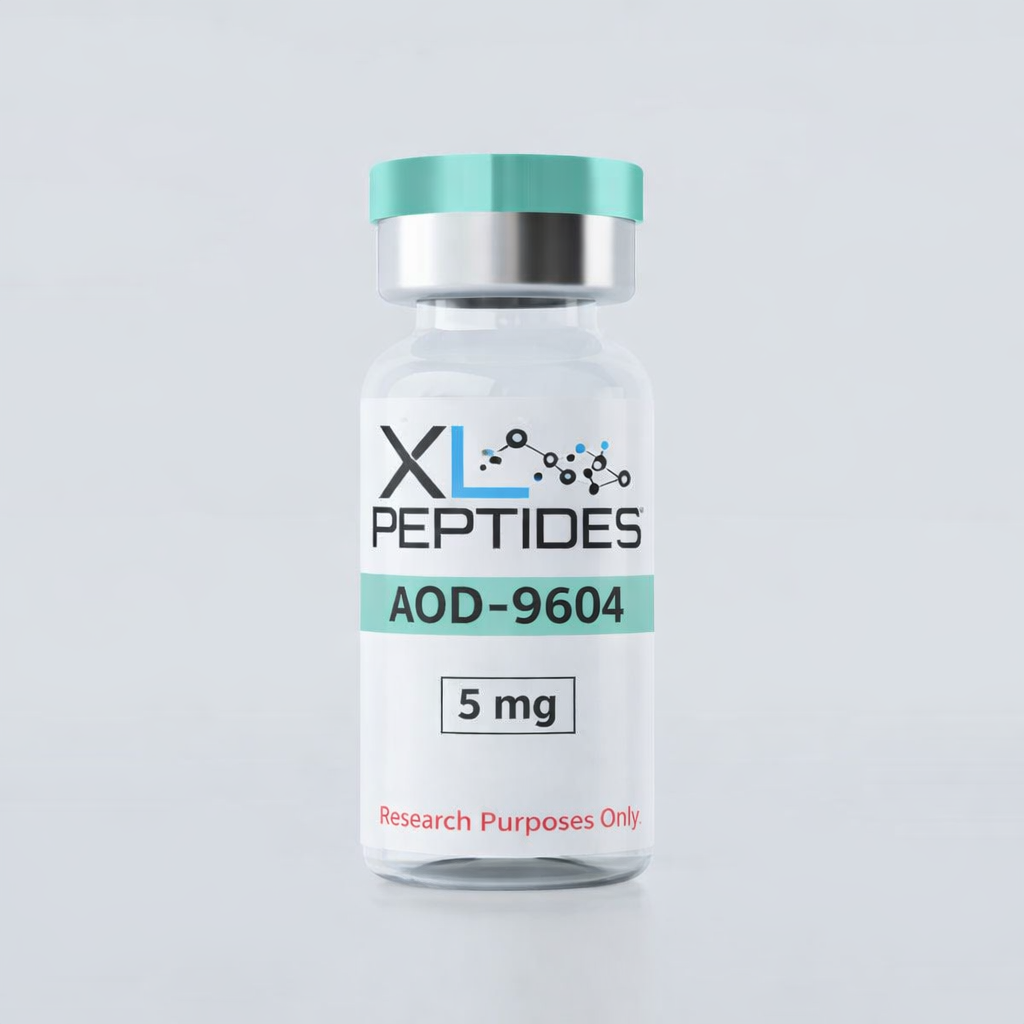
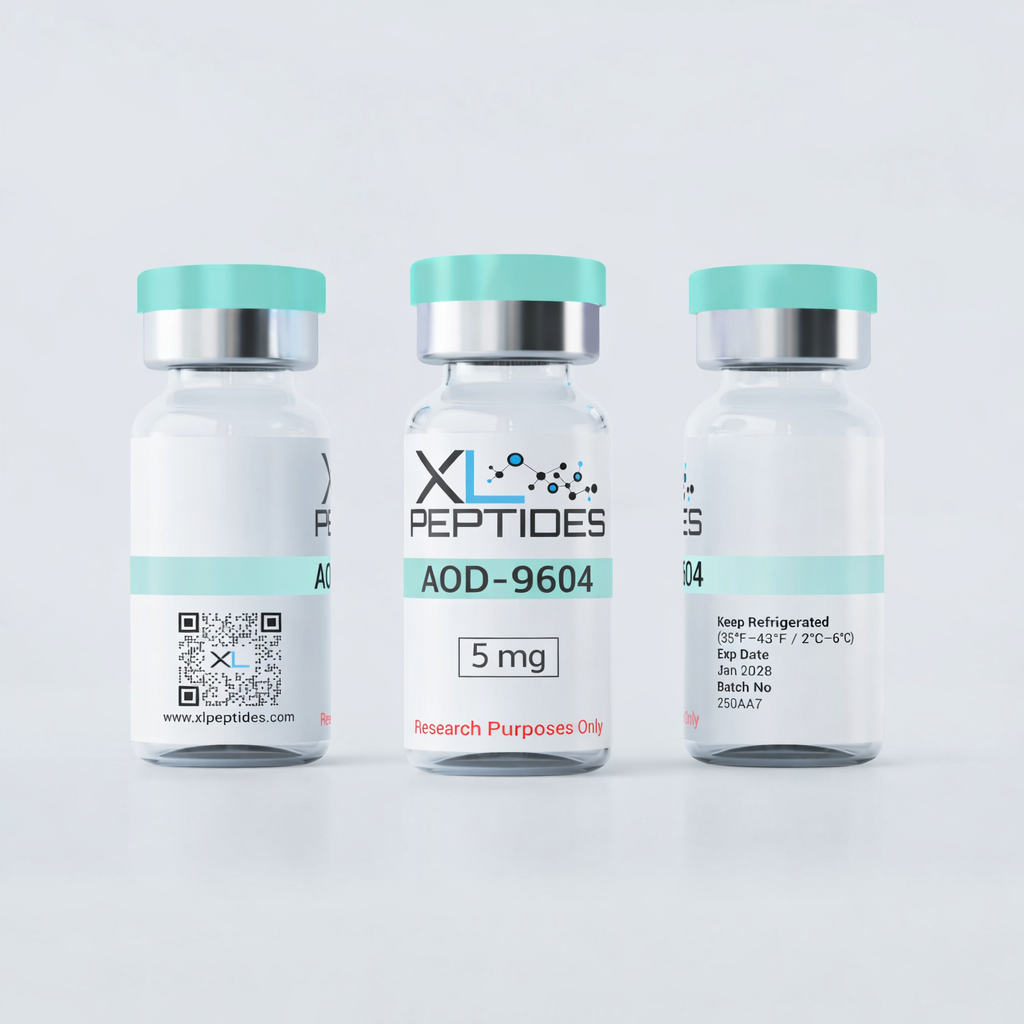
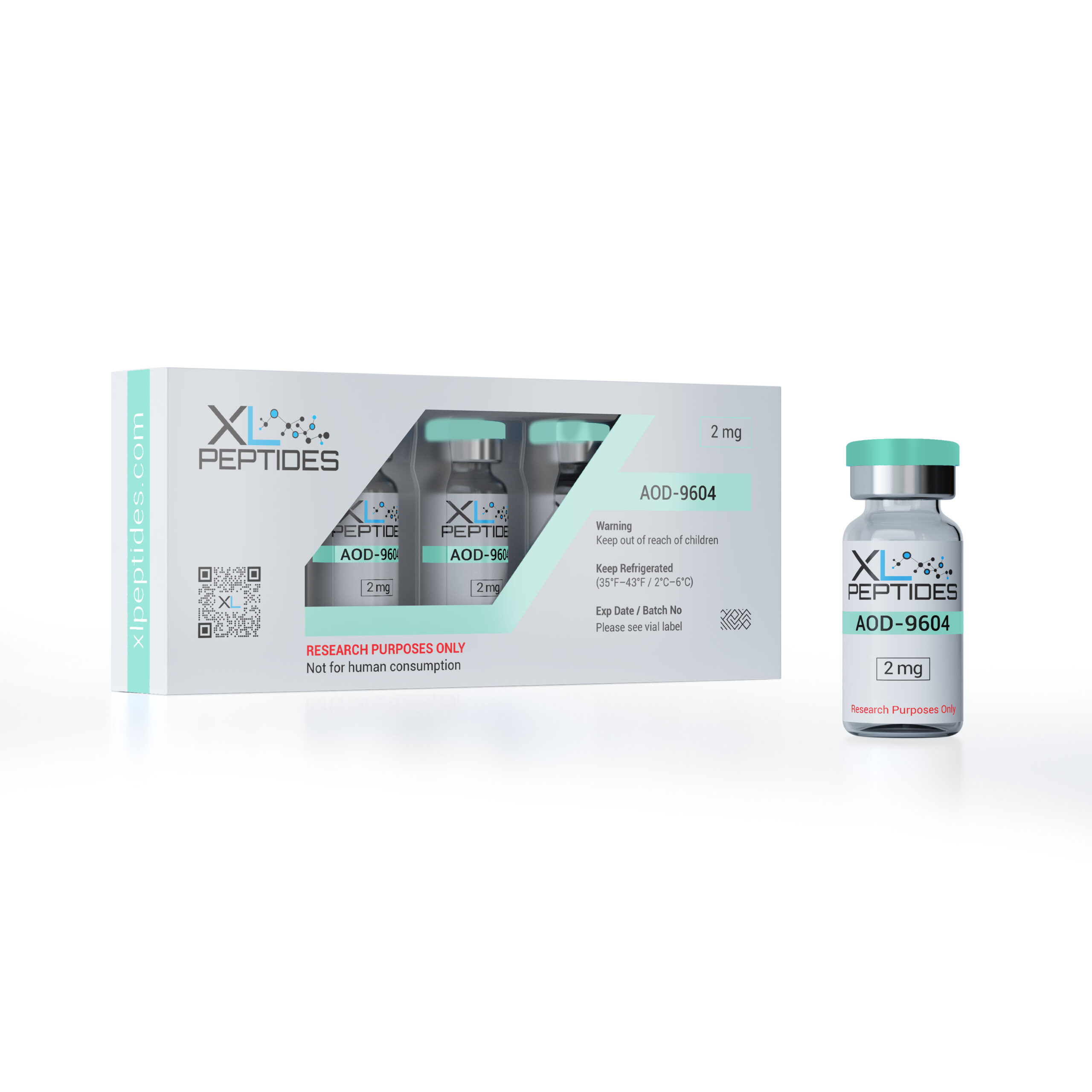
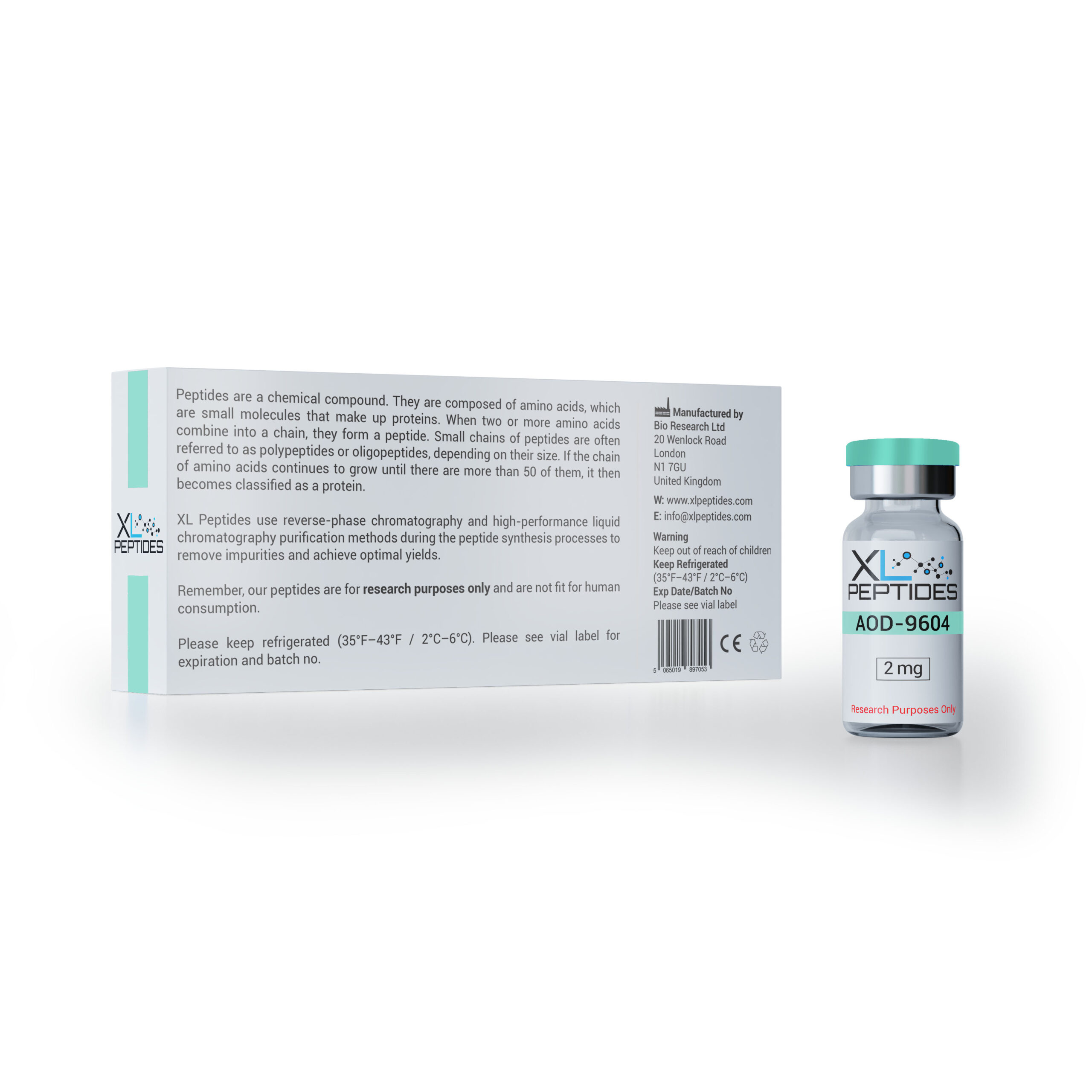
Buy AOD-9604 UK from XL Peptides for controlled in-vitro laboratory research. Our AOD-9604 research peptide is supplied as AOD-9604 5mg lyophilised material for experimental studies of peptide-fragment pharmacology, structure–activity relationships and assay development.
AOD-9604 is a synthetic peptide fragment derived from the C-terminal region of human growth hormone. Researchers use it in controlled laboratory systems to investigate peptide-fragment behaviour, signalling responses and comparative assay readouts.
However, laboratory and preclinical findings do not establish safety, efficacy or suitability for human use. Therefore, XL Peptides supplies AOD-9604 strictly as a laboratory research material.
For laboratory research only. Not for human or veterinary use.
AOD-9604 5mg key features
- Contains 5 mg of lyophilised research material.
- Derived from the C-terminal region of human growth hormone.
- Used in controlled in-vitro peptide-fragment and signalling studies.
- Relevant to structure–activity and assay-development research.
- Gel-prone at higher concentrations and supplied with a free empty 10 ml vial for laboratory handling.
- Intended strictly for laboratory research.
AOD-9604 5mg product specifications
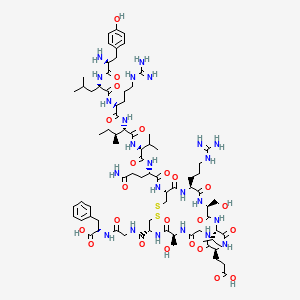
- Product name: AOD-9604
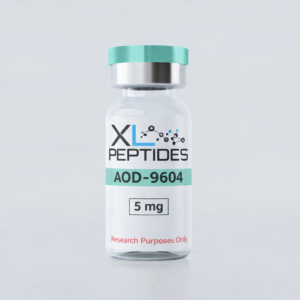
- Product size: 5 mg
- Alternative references: hGH fragment analogue; C-terminal hGH peptide fragment
- Class: Peptide fragment / research analogue
- Research area: Peptide-fragment pharmacology, signalling and assay development
- Form: Lyophilised powder
- Appearance: White to off-white solid
- Intended use: Laboratory research only
Buy AOD-9604 UK — Handling & Storage
Correct laboratory handling helps maintain consistency between experiments. Therefore, keep unopened lyophilised AOD-9604 vials cool, dry and protected from direct light and moisture.
- Dry storage: Keep lyophilised material at 2–8 °C, protected from light and moisture.
- Preparation: Allow the vial and an appropriate laboratory diluent to reach room temperature before preparation.
- Mixing: Introduce laboratory diluent slowly down the side of the vial and swirl gently rather than shaking or vortexing.
- Prepared material: Keep prepared research solutions at 2–8 °C where appropriate for the laboratory protocol.
- Laboratory practice: Follow validated SOPs for concentration, solvent compatibility, contamination control and experimental use.
For additional information, see our
Peptide Reconstitution, Handling & Storage Guide.
Important: Free empty 10 ml vial included
Every AOD-9604 order includes a free empty 10 ml vial. AOD-9604 can be gel-prone when prepared at higher concentrations. Therefore, laboratory workflows should use a minimum total preparation volume of 5 ml to reduce the likelihood of gelling.
- Step 1: Add approximately 2 ml of suitable laboratory diluent to the original AOD-9604 vial.
- Step 2: Transfer the prepared solution into the included empty 10 ml vial.
- Step 3: Add further laboratory diluent to reach a minimum total volume of 5 ml.
If too little total volume is used, AOD-9604 may become gel-like and difficult to handle consistently in research workflows.
Buy AOD-9604 UK for Peptide-Fragment Research
Researchers looking to buy AOD-9604 may use this peptide in controlled experimental investigations of peptide-fragment pharmacology, signalling responses and comparative assay behaviour.
Additionally, laboratory models can examine structure–activity relationships under defined experimental conditions.
For example, researchers may compare peptide-fragment behaviour across biochemical or cell-based assay systems.
Because these studies remain laboratory and preclinical research, they do not establish clinical effectiveness or human safety. Therefore, XL Peptides supplies AOD-9604 solely for non-clinical research applications.
AOD-9604 Research Peptide Studies
Researchers use AOD-9604 research peptide in controlled experimental systems to investigate peptide-fragment behaviour and downstream assay responses.
Moreover, AOD-9604 can be compared with other growth-hormone-derived research fragments in structure–activity and signalling studies.
For example, cell-based or biochemical assays may assess differences in peptide response, signalling behaviour and assay readouts under controlled laboratory conditions.
In addition, researchers can investigate how peptide-fragment structure influences activity across different experimental models.
Therefore, AOD-9604 provides a defined research material for studying peptide-fragment pharmacology rather than clinical outcomes.
Why Researchers Buy AOD-9604 UK
Researchers may select AOD-9604 5mg when investigating peptide-fragment structure, signalling and assay behaviour.
Additionally, its defined fragment structure supports controlled comparative research alongside related peptide materials.
Furthermore, researchers sourcing AOD-9604 UK can obtain the material domestically for clearly defined research-use-only applications.
Related AOD-9604 research products
Researchers investigating growth-hormone-derived peptide fragments and related signalling pathways may also be interested in:
- HGH-Frag (176–191) 5mg — for related hGH-fragment and structure–activity research
- CJC-1295 No DAC 5mg — for peptide-signalling and growth-hormone-axis research
- Ipamorelin 5mg — for peptide-receptor and growth-hormone-axis research
Frequently asked questions
What is AOD-9604?
AOD-9604 is a synthetic peptide fragment derived from the C-terminal region of human growth hormone. Researchers use it in controlled laboratory studies of peptide-fragment behaviour, signalling and assay development.
Is AOD 9604 the same as AOD-9604?
Yes. The terms AOD 9604 and AOD-9604 refer to the same research peptide. The hyphenated form is the standard product spelling.
What does AOD9604 mean?
AOD9604 is another common way of writing AOD-9604 without punctuation. It refers to the same research peptide.
How much AOD-9604 does each vial contain?
Each vial contains AOD-9604 5mg of lyophilised research material.
Why is a free empty 10 ml vial included?
AOD-9604 can be gel-prone at higher concentrations. The included empty 10 ml vial allows laboratory preparation at a larger total volume, with a recommended minimum total volume of 5 ml for easier handling.
How should AOD-9604 be prepared for laboratory handling?
For gel-prone material, laboratories can initially add approximately 2 ml of suitable diluent to the original vial, transfer the solution to the included 10 ml vial, and then add further diluent until the total volume is at least 5 ml.
What do researchers study with AOD-9604?
Researchers investigate peptide-fragment pharmacology, signalling behaviour, assay responses and structure–activity relationships in controlled experimental systems.
How should laboratories store AOD-9604?
Keep unopened lyophilised material at 2–8 °C and protect it from light and moisture. After preparation, laboratories should follow validated SOPs appropriate to the solvent, concentration and experimental protocol.
Where can researchers buy AOD-9604 in the UK?
Researchers can buy AOD-9604 UK from XL Peptides for controlled in-vitro laboratory research. Each vial contains 5 mg of lyophilised research material.
Is AOD-9604 intended for human use?
No. XL Peptides supplies AOD-9604 strictly for laboratory research. Therefore, it is not intended for human or veterinary use, consumption, administration, diagnosis, treatment or clinical applications.
AOD-9604 research papers & external resources
Legal & safety information
XL Peptides supplies this material strictly for laboratory research. Therefore, it is not a medication, food, supplement, cosmetic or consumer-use product and is not for human or veterinary use.
Additionally, customers confirm through purchase that appropriately qualified personnel will handle the material according to institutional procedures and applicable laws and regulations.
Disclaimer
Used solely for in vitro experiments and cannot be:
- Used in clinical trials involving humans
- Administered to humans as part of an experiment or investigation
- Supplied to another party for human investigational use
Additional information
| Weight | 0.07 kg |
|---|---|
| Dimensions | 3.8 × 1.6 cm |
XL Peptides works with various third-party laboratories to provide testing reports for all its manufactured products.
Date | Batch No | Issuing Lab | Lab Report | View QR |
11-Mar-26 | 10000023712-5 | 
| ; | 
|
To find out more about our testing policy, please visit our Testing page.
Reviews
There are no reviews yet.