Peptides are sensitive research compounds. Their stability can be affected by temperature, moisture, light, oxygen exposure, pH, and the peptide’s chemical structure.
Because of this, storage conditions are an important part of maintaining sample integrity in non-human laboratory research.
In many research settings, dry lyophilised peptides are stored cold for longer-term stability. However, refrigeration is only one part of the picture.
Researchers also need to consider humidity control, light protection, batch documentation, and whether the material is being stored as a dry powder or as a prepared laboratory solution.
What are peptides?
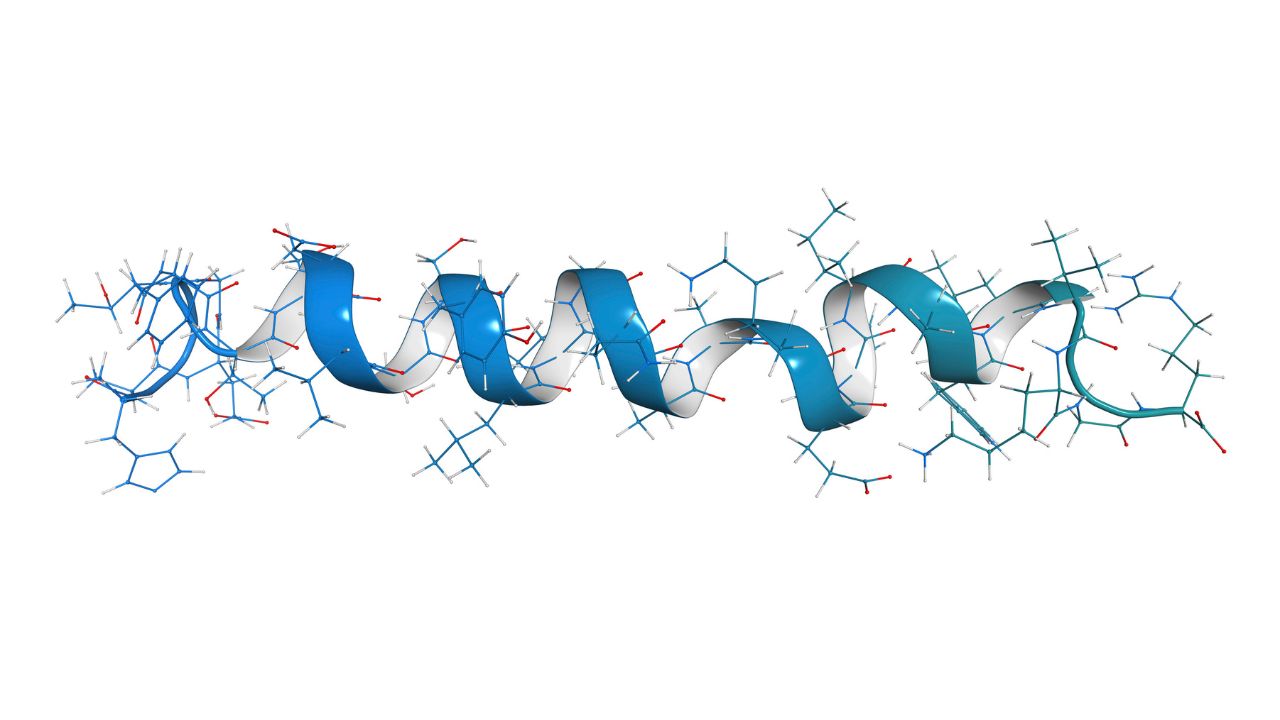
Peptides are short chains of amino acids joined together by peptide bonds. They are smaller than many proteins and can vary widely in length, structure, charge, solubility, and stability.
In laboratory research, peptides may be studied because they can interact with biological systems in highly specific ways.
Some peptides are used as reference materials, assay components, receptor-binding tools, or model compounds for studying biochemical pathways.
Not all peptides behave the same way. A small, simple peptide may have very different storage requirements from a longer peptide, a modified peptide, or a peptide containing sensitive amino acid residues.
Do peptides need to be refrigerated?
In research contexts, many peptides benefit from cold storage, especially when long-term stability is required. However, “refrigerated” can mean different things depending on the laboratory setting.
For some short-term research storage, controlled refrigeration may be suitable if supported by the supplier’s documentation.
For longer-term storage, many lyophilised peptide materials are commonly kept at freezer temperatures, often with protection from moisture and light.
The key point is that storage should follow the peptide-specific documentation supplied with the batch.
A Certificate of Analysis, product specification sheet, or supplier storage statement should always be checked before deciding on storage conditions.
Why researchers study peptide storage stability
Researchers study peptide storage stability because degradation can change the material being tested.
If a peptide degrades, oxidises, aggregates, or absorbs moisture, the sample used in an assay may no longer match the intended research material.
This matters for reproducibility. If one batch is stored under controlled conditions and another is exposed to heat or humidity, the results may not be directly comparable.
Storage stability is also important for analytical work. Techniques such as HPLC and mass spectrometry may detect impurities, degradation products, or changes in the main peptide peak.
These changes can affect how researchers interpret experimental findings.
Scientific mechanisms and pathways affecting peptide stability
Peptide stability is influenced by both chemical and physical processes.
Temperature-related degradation
Higher temperatures can increase the rate of chemical reactions. For peptides, this may include bond cleavage, side-chain changes, or other degradation processes.
Cold storage helps slow many of these reactions, although it does not make every peptide permanently stable.
Hydrolysis
Hydrolysis involves chemical breakdown linked to water exposure. Since peptides contain peptide bonds and reactive side chains, moisture can be an important factor in storage stability.
This is one reason dry, lyophilised materials are often protected from humidity.
Oxidation
Some amino acid residues are more prone to oxidation than others. Oxidation can alter the structure of a peptide and may change its behaviour in laboratory assays.
Exposure to air, light, and certain storage conditions may increase the risk of oxidative change.
Deamidation
Deamidation is a chemical change that can occur in certain amino acid residues. It may alter the charge, structure, or analytical profile of a peptide.
The rate of deamidation can depend on sequence, pH, temperature, and storage environment.
Aggregation
Some peptides can self-associate or form aggregates. Aggregation may affect solubility, assay behaviour, and analytical consistency.
This process depends on the peptide sequence, concentration, storage form, and environmental conditions.
Lyophilised peptides vs liquid peptide preparations
The peptide’s form is one of the most important storage factors.
Lyophilised peptides are freeze-dried materials with much of the water removed. This dry form is often more stable than a liquid preparation because lower water content can reduce some degradation pathways.
Liquid peptide preparations are generally more vulnerable to degradation. They may be more affected by temperature, pH, microbial contamination risk in non-sterile research settings, oxidation, and repeated temperature changes.
Because stability varies by peptide, laboratories should avoid assuming that a single storage condition works for all materials.
The supplier’s batch-specific documentation should be treated as the primary guide.
Does refrigeration prevent peptide degradation?
Refrigeration can slow some degradation processes, but it does not stop all changes. Peptides may still degrade over time, especially if exposed to moisture, light, repeated temperature cycling, or unsuitable storage conditions.
Cold storage should be seen as part of a wider stability strategy rather than a complete solution. A peptide stored cold but repeatedly exposed to condensation may still lose quality.
Likewise, a peptide protected from moisture but kept at an unsuitable temperature may still be unstable.
Good storage practice in research depends on controlling several variables together.
Practical peptide storage factors for laboratories
For research-only materials, storage decisions should be based on the peptide’s documentation, but several general factors are commonly considered.
Temperature
Lower temperatures often help slow degradation. Dry peptide materials intended for longer-term storage are frequently kept frozen, while refrigerated storage may be used in some short-term research contexts if supported by supplier guidance.
Moisture
Moisture can contribute to hydrolysis and other chemical changes. Dry peptide materials are often stored with humidity control in mind.
Light
Some peptides may be sensitive to light exposure. Light protection can help reduce the risk of unwanted chemical change.
Air exposure
Oxygen exposure may contribute to oxidation in sensitive sequences. Minimising unnecessary exposure can help preserve analytical consistency.
Temperature cycling
Repeated movement between cold and warmer environments may increase condensation risk and contribute to instability. Laboratories often manage this by planning storage access carefully.
Final summary: do peptides need to be refrigerated?
Do peptides need to be refrigerated? In many laboratory research contexts, cold storage is recommended or preferred, especially for maintaining the stability of lyophilised peptide materials over time.
However, the best storage condition depends on the individual peptide and the documentation supplied with the batch.
Temperature, moisture, light, oxidation risk, peptide form, and handling environment all influence stability.
For research laboratories, the safest scientific approach is to follow batch-specific storage guidance, maintain consistent conditions, and use documented quality controls such as purity testing and Certificates of Analysis.
Note: This article is for educational and research information only. Products discussed are intended for laboratory research use only and are not for clinical, food, cosmetic, veterinary, or household applications.
FAQ
Do all peptides need the same storage conditions?
No. Storage requirements vary depending on the peptide sequence, form, purity, sensitivity to moisture, and supplier documentation.
Are lyophilised peptides usually more stable than liquid preparations?
In many research settings, dry lyophilised peptides are more stable than liquid preparations because reduced water content can slow some degradation pathways. However, stability still depends on the specific peptide.
Why is moisture important in peptide storage?
Moisture may contribute to hydrolysis and other chemical changes. This can affect peptide integrity and may alter the material used in laboratory assays.
Can light affect peptide research materials?
Some peptides may be light-sensitive. Light exposure can contribute to chemical changes in certain materials, so light protection is often considered during research storage.
Is refrigeration enough to preserve peptide quality?
Refrigeration may slow some degradation processes, but it is not a complete guarantee of stability. Moisture, light, air exposure, peptide form, and storage duration are also important.
Sources
- National Human Genome Research Institute – Peptide Definition
https://www.genome.gov/genetics-glossary/Peptide - NCBI Bookshelf – Biochemistry, Peptide
https://www.ncbi.nlm.nih.gov/books/NBK562260/ - PubMed – Designing Formulation Strategies for Enhanced Stability of Therapeutic Peptides in Aqueous Solutions: A Review
https://pubmed.ncbi.nlm.nih.gov/36986796/ - PMC Full Text – Designing Formulation Strategies for Enhanced Stability of Therapeutic Peptides in Aqueous Solutions: A Review
https://pmc.ncbi.nlm.nih.gov/articles/PMC10056213/ - PMC Full Text – Factors Affecting the Physical Stability (Aggregation) of Peptide Therapeutics
https://pmc.ncbi.nlm.nih.gov/articles/PMC5665799/ - Sigma-Aldrich / Merck – Handling and Storage Guidelines for Peptides and Proteins
https://www.sigmaaldrich.com/US/en/technical-documents/technical-article/research-and-disease-areas/cell-and-developmental-biology-research/handling-and-storage - Bachem – Handling and Storage Guidelines for Peptides
https://www.bachem.com/knowledge-center/handling-and-storage-guidelines-for-peptides/